エピソード

  • The Greatest Lessons on Reinvention and Retirement from Louise Olson
    2026/05/03
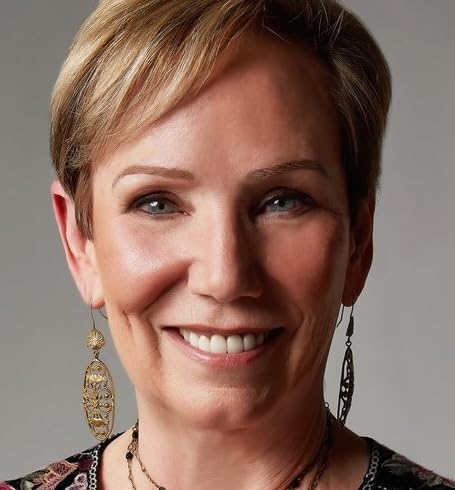
    Rethinking Retirement: Why It's Never Too Late to Reinvent Yourself Featuring Louise Olson What happens when you step away from the role that once defined you? Why is this thing called "retirement" such a challenge? For many, retirement feels like an ending. But in this episode of On the Brink with Andi Simon, my guest Louise Olson shows us something very different—it can be the beginning of a bold, expansive, and deeply meaningful next chapter. Louise's journey is not a straight line. And that's exactly why it matters. She didn't begin her professional career until age 45. Before that, she was a stay-at-home mother in a traditional family, where the expectation was clear: care for the home, raise the children, and leave career-building to others. But life has a way of nudging us forward. And Louise listened. Starting as a secretary at Motorola, she stepped into opportunities she didn't even know she was ready for—eventually becoming an international meeting planner, traveling the world, and working on global programs including those with Interpol. And here's what makes her story so powerful: She didn't wait to be chosen. She raised her hand, took bold action, and learned as she went. Reinvention and Retirement are not Just a Moment—They are a Mindset Louise's story is a masterclass in what I call rethinking retirement. When she stepped away from a major global client after 16 years, she faced the same question so many of us do: "Who am I now?" It's one of the four essential questions I explore in Rethink Retirement: Who am I without my business card? What will I do every day? Where do I still matter?Who is my community? Louise didn't rush to answer them. She explored them. She leaned into curiosity, not certainty. She experimented, not perfected. And she reminds us of something we often forget: You are not a victim of your circumstances—you are the creator of them. The Courage to Begin Again (At Any Age) At an age when many people slow down, Louise sped up. She climbed Machu Picchu at 63 Built an international career after 65 Launched retreats and community programs in her 70s Continues to travel, teach, and inspire women globally Her message is simple, but profound: It is never too late. Not to learn something new. Not to build something meaningful. Not to become someone different. What holds most people back isn't age—it's mindset. Retirement should be your From Structure to Self-Design Your Retirement One of the biggest challenges people face in retirement is the loss of structure. For decades, your calendar is filled for you. Then suddenly… it's empty. Louise sees this not as a problem—but as an invitation. "You are going to have to create your retirement," she shared. "And you've never had to do that before." That blank space? It's where your next life gets designed. But design requires intention. Louise starts her days with a simple practice: Gratitude for the day ahead Clarity on what she wants to createA willingness to try something new It's not about having all the answers. It's about taking the next step. And retirement is a great accelerator for you to redesign this next stage in your life. Finding Your Tribe Again, and It Is More Than Other Retirees Perhaps one of the most powerful insights from our conversation was about community. When we leave our careers, we often lose more than a job—we lose our network, our daily interactions, our sense of belonging. Louise recognized this early. Retirement meant she needed a new community. So she didn't wait for a community to find her—she built one. Through her "Wise Wandering" retreats and meetup groups, she's creating spaces where women can: Explore new identities Share their transitions Build meaningful relationships Feel seen and understood Because retirement without community can quickly become isolation. And none of us are meant to navigate this stage alone. What Can You Learn from Louise? Louise's journey offers a few powerful lessons: Say yes before you feel ready Follow curiosity—it will lead you forward Don't wait for permission to reinvent yourself Build your community intentionally Design your days with purpose, not habit Most importantly: Retirement is not about stopping. It's about choosing. Ready to Rethink Your Next Chapter? If Louise's story resonates with you, I invite you to take the next step. Join me for my upcoming Masterclass, where we'll explore how to: Redefine your identity beyond your career Create meaningful structure in your days Clarify your purpose and impact Build a community that supports your journey Or start with the book: Rethink Retirement—available now. Because this stage of life isn't the end of something. It's the beginning of what's next. Have a story about your own transition? I'd love to hear it. Share it with me—because together, we learn to see, feel, and think in new ways. Connect with me: Join my Substack Newsletter Rethink RetirementWebsite: ...
    続きを読む 一部表示
    33 分
  • Rethink Retirement with Jeannette Hobson
    2026/04/27

    What happens when successful professionals retire—and realize they're not ready to stop?

    In this episode of On the Brink with Andi Simon, I speak with Vistage Chair Jeannette Hobson about the evolving meaning of retirement—and why so many people are unprepared for what comes next.

    Jeannette shares her remarkable journey of career pivots, lifelong curiosity, and leadership—and how those same qualities are essential for navigating life beyond work.

    We explore why retirement isn't an ending, but a transition—one that requires more than a financial plan. It requires a life plan.

    If you are thinking about retirement—or already there—this conversation will help you rethink what comes next.

    In This Episode:
    • Why curiosity is the key to lifelong reinvention
    • The hidden risks of retiring without a life plan
    • How to prepare before you leave your role
    • The importance of purpose, structure, and community
    • Why "age is irrelevant" in designing your next chapter
    Connect with Andi

    Learn more about Dr. Andi Simon's work, books, and upcoming workshops:
    www.andisimon.com

    続きを読む 一部表示
    34 分
  • Lisa Woodruff Wants Your Home To Escape Organizational Chaos
    2026/04/20
    In this episode of On the Brink with Andi Simon, Lisa Woodruff, founder of Organize 365, shares a powerful reframe of what it means to be organized. Moving beyond clutter and to-do lists, she explores how organization is a learnable skill that can reduce "overwhelm", improve time management, and create space for purpose and meaning. Drawing on her research in applied psychology and years of hands-on experience, Lisa introduces practical systems to manage the "invisible load" of daily life, treat your household like a business, and redesign your routines for greater productivity and well-being. This conversation offers valuable insights for anyone navigating life transitions—including retirement—who wants to regain control, build better habits, and create a more intentional and fulfilling life. How are you going to manage organizational chaos in your home? Listen in and learn more. The Real Problem: We Know Organization Matters—But Don't Know How to Get Organized In this episode of On the Brink with Andi Simon, I had a fascinating conversation with Lisa Woodruff, founder and CEO of Organize 365 and author of Escaping Quicksand. What began as a discussion about organizing quickly became something much deeper: a rethinking of how we live, work, and care for ourselves across every stage of life. Because organization, as Lisa shows us, isn't about tidying up—it's about reclaiming your time, your energy, and ultimately, your purpose. Lisa shared a powerful statistic: 87% of Americans believe organization is a learnable skill—but fewer than 18% feel they are organized. That gap is where overwhelm lives. Most people think the goal is to "get everything done" so they can relax. But Lisa reframes the problem entirely: The real question is: how do we manage our households as the economic and operational systems they truly are? This is where her work becomes transformational. Your Home Is an Enterprise—Eliminate Organizational Chaos One of the most important insights from our conversation is this: Your household is not just a home—it is an economic entity. You manage: FinancesOperations (maintenance, food, logistics)People (family, caregiving, relationships)Strategy (planning, scheduling, life transitions) Yet unlike in business, no one trains us to run it. Lisa's solution? Treat your home like a business—and yourself like its CEO. That mindset shift alone can begin to reduce chaos and create clarity. Where to Begin: Simple, Practical Steps Lisa offers a refreshingly realistic starting point: Acknowledge the scale of what you're managing You are running a complex system—give yourself credit.Start small—but stay consistent Even 20 minutes a day creates momentum.Focus on systems, not perfection The goal is progress, not a perfect home.Invest in your future self Every small act of organization today reduces stress tomorrow. This conversation is not just about organizing your home. It's about: Taking ownership of your timeDesigning your daily lifeCreating space for meaning and purpose Or, as Lisa so beautifully puts it: "Invest today in what you want to have tomorrow." Key Takeaways Organization is a learnable skill—but most people are never taught how to do itYour household functions like a business—and needs systems to operate effectivelyThe biggest source of overwhelm is the invisible mental load, not just physical tasksSelf-care is not indulgence—it's essential, holistic care for yourselfStructure and systems are critical, especially during life transitions like retirementSmall, consistent actions can create exponential improvements in your life To Learn More About Lisa Woodruff: Lisa's profile: linkedin.com/in/lisawoodruff Website: organize365.com (Company) Connect with me: Join my Substack Newsletter Rethink RetirementWebsite: www.simonassociates.netBook Website: www.andisimon.comEmail: info@simonassociates.netLearn more about our books here: Rethink: Smashing the Myths of Women in Business Women Mean Business: Over 500 Insights from Extraordinary Leaders to Spark Your Success On the Brink: A Fresh Lens to Take Your Business to New Heights Now--it is time to share our new book with you! Rethink Retirement: It's Not The End--It's the Beginning of What's Next Out on Amazon and WalMart, and in your local bookseller and Rethink Retirement: The Workbook
    続きを読む 一部表示
    43 分
  • Rethink Retirement: Why Leaving Work Isn't Leaving Relationships Behind
    2026/04/14
    Summary Retirement is often framed as a personal milestone—a moment when we step away from work and into freedom. But what if retirement isn't just about leaving a job? What if it's about navigating the deep relationships, identity shifts, and responsibilities we carry with us into what comes next? In this episode of On the Brink with Andi Simon, Andi speaks with Katherine Crewe, a Tech/Vistage chair in Canada, whose thoughtful approach to retirement reveals a powerful truth: transitions are not events—they are processes. The Myth of the Clean Exit: Leaving Work Isn't Leaving Relationships Katherine's story challenges the idea that retirement is a simple, clean break. After decades in biomedical engineering and leadership, she moved into a role guiding CEOs and executives. Now, in her late sixties, she is not "done"—she is reflecting, recalibrating, and carefully designing her transition. What makes her journey so compelling is this: she is not just leaving a role—she is stepping away from a community. As a chair, Katherine has built deep, trusted relationships with the leaders she supports. When she began discussing retirement with them, the reactions were emotional and varied. Some encouraged her to stay. Others supported her decision. Many wanted one thing above all—a thoughtful, gradual transition. This wasn't about replacing a position. It was about preserving relationships, continuity, and trust. Retirement Is a Social Transition, Not Just a Personal One One of the most important insights from this conversation is that retirement impacts more than the individual. Katherine realized that stepping away from her role felt less like leaving a job—and more like leaving a network of meaningful human connections. The responsibility she feels is not just to herself, but to those who depend on her leadership. This is a critical lesson for organizations as well. As Andi notes, companies are facing a "senior tsunami"—a wave of experienced employees approaching retirement. Yet many organizations still treat retirement as an administrative process rather than a cultural transition. What Katherine is modeling is something different: Thoughtful succession planning Gradual transitions Honoring relationships and institutional knowledge This is where anthropology becomes powerful. It helps us see what is really happening beneath the surface. The Paradox of Choice in Retirement Unlike traditional roles, Katherine's position has no fixed retirement age. She could continue indefinitely. And that creates a new kind of challenge—the paradox of choice. If you can keep working… should you? Rather than choosing between "all or nothing," Katherine is exploring a more nuanced path: Reducing from three groups to one Staying engaged in meaningful work Creating more space for personal life and exploration This is a powerful reframe. Retirement doesn't have to be binary. It can be designed. Preparing Before You Retire Perhaps the most valuable insight Katherine offers is that she has already been preparing for retirement—without calling it that. She has: Structured her own time for years Built her identity around relationships, not titles Prioritized wellness as a daily practice Maintained independence in how she works and lives As a result, she does not fear the four common retirement pain points: Loss of identity Lack of daily structure Unclear purpose Disconnection from community Why? Because she has already built a life that isn't dependent on a job to provide those things. This is the real lesson: Retirement is not something you enter. It is something you prepare for—while you are still working. Couples, Conversations, and "Confetti Moments" Another powerful theme in this episode is how retirement impacts relationships at home. Katherine and her husband are both still active, both thinking about the future—but not always in structured ways. Instead, they have what she calls "confetti moments"—brief, scattered conversations about what retirement might look like. This is deeply relatable. Many couples don't sit down and design their future together. They talk in fragments. And yet, retirement will require alignment: How will we spend our time?Will we keep working?What does "being together" actually look like? Without intentional conversations, these differences can become points of tension. What This Means for You Katherine's journey reminds us that retirement is not an ending—it is a transition into a new stage of life that deserves as much thought and care as any career move. It is not about stopping. It is about redesigning. Key Takeaways Retirement is not a single event—it is a gradual, human transition. Leaving work often means leaving relationships, not just responsibilities. Organizations must treat retirement as a cultural and strategic issue, not just HR process.The best retirement transitions are designed, not abrupt. Preparing early—by building identity, structure, ...
    続きを読む 一部表示
    26 分
  • The Generous Leader: Why Modern Leadership Is About Giving, Not Taking
    2026/04/02
    Podcast Summary In this episode of On the Brink with Andi Simon, Dr. Andi Simon speaks with Joe Davis, former senior partner at Boston Consulting Group and author of The Generous Leader. Their conversation explores how leadership has evolved in a fast-changing world—and why the most effective leaders today succeed by developing others, listening deeply, and embracing humility. The discussion offers practical insights on leadership, team development, and navigating uncertainty with confidence and compassion. Why Leadership Must Change in a World of Constant Disruption We are living through an era of continuous transformation—technological disruption, shifting workforce expectations, and evolving organizational cultures. As Dr. Andi Simon notes, the past is no longer a reliable guide for the future. Leaders must adapt, not by controlling change, but by learning how to move with it. Joe Davis's career journey reflects this reality. From Procter & Gamble to Harvard Business School and ultimately to leadership roles at BCG, his path was anything but linear. Instead of following a predictable trajectory, Davis embraced unexpected opportunities—often the ones others might avoid. Key takeaway: Great leaders don't follow a fixed path—they develop the agility to step into the unknown. What Is a Generous Leader? At the heart of the conversation is Davis's core idea: leadership is not about personal success—it's about enabling others to succeed. A "generous leader" gives of themselves freely to help others grow, without expecting immediate personal gain. This mindset transforms leadership from a position of authority into a platform for impact. Core Traits of Generous Leadership Generous Listening – Truly hearing others, not interrupting or assuming Generous Communication – Connecting with clarity and empathy Generous Inclusion – Bringing diverse voices into the conversation Generous Development – Actively coaching and growing others Generous Recognition – Celebrating contributions, big and small Small Acts, Big Impact – Simple gestures that build trust Authenticity & Vulnerability – Leading as a human, not a persona The Leadership Mistake Most People Make One of the most powerful moments in the podcast is when Davis reflects on a common leadership error: thinking you already know what others are going to say. He shares a story of interrupting a colleague mid-thought—only to be told bluntly to "let me finish." The lesson was clear: Listening is not waiting to speak—it's learning something you don't already know. This insight is critical in today's workplace, where collaboration and innovation depend on diverse perspectives. Leadership at Scale: Can You Lead 7,000 People? Davis once led over 7,000 people. His approach offers a valuable lesson for executives and emerging leaders alike: You don't scale leadership through control—you scale it through culture and systems. How to Lead at Scale Reinforce clear values consistently Build structured feedback and development processes Promote people who model the culture Communicate constantly—and check if your message is truly understood Create environments where people feel seen and heard When leaders align behaviors, values, and systems, leadership becomes self-reinforcing across the organization. Why Empathy Is a Strategic Advantage During the COVID-19 pandemic, Davis realized how disconnected leaders can be from employees' lived realities. While he had space and comfort at home, younger employees were working from cramped apartments, sharing limited resources. This realization changed how he led. Leadership insight: You cannot lead effectively if you don't understand the context in which your people are living and working. Empathy is no longer optional—it is a strategic necessity. The Future of Leadership: From Authority to Enablement One of the most important shifts discussed in the episode is this: The leader's job is not to have the best answer—but to get the best answer out of the room. This reflects a broader transformation: From command-and-control → to collaborate-and-enableFrom individual expertise → to collective intelligenceFrom certainty → to adaptability In a world shaped by rapid change and uncertainty, leaders must become facilitators of growth—not just decision-makers. Final Takeaway: Ask and Listen If there is one lesson to remember, it is simple but profound: Ask. And then listen. Great leadership begins with curiosity and humility. By understanding others' perspectives, leaders unlock innovation, trust, and performance. Why This Matters Now As organizations face talent shortages, generational shifts, and accelerating change, leadership is being redefined. The most successful leaders will not be those who know the most—but those who develop the most in others. Joe Davis's philosophy of generous leadership offers a powerful roadmap for navigating this new reality. From Observation to ...
    続きを読む 一部表示
    40 分
  • How AI Is Transforming Meetings Into Strategic Assets with Ramsey Pryor
    2026/03/24
    Summary Meetings dominate our workdays—but what if they could become a source of intelligence rather than inefficiency? In this episode of On the Brink with Andi Simon, I speak with Ramsey Pryor, CEO and founder of Rumi, an AI‑powered meeting intelligence platform that is redefining how organizations capture knowledge, collaborate, and make decisions. Together, we explore how artificial intelligence is reshaping the future of work by transforming everyday conversations into actionable insights. The Problem with Meetings Today Let's start with a simple truth: most meetings underperform. Professionals spend 30% or more of their time in meetings, and much of that time is wasted repeating information, catching people up, or trying to recall what was previously discussed. As Ramsey noted, research suggests that two‑thirds of meeting time is spent rehashing prior conversations—a staggering drain on productivity and morale. Across industries—from banking to healthcare—I've seen meetings with no agenda, no clear outcomes, and no shared understanding of next steps. Attendance becomes the work, rather than progress. So the real question becomes: What if meetings could finally work for us instead of against us? The Hidden Value Inside Your Meetings—and How AI Unlocks It Ramsey Pryor founded Rumi during the pandemic, when virtual meetings exploded and attention became fragmented. His idea was deceptively simple: Capture everything that happens in meetings and turn it into usable knowledge. Using AI, Rumi: Automatically transcribes conversationsSummarizes key insightsIdentifies and tracks action itemsCreates a searchable "meeting memory" Instead of relying on human recollection—or scattered notes—teams gain access to a living, searchable database of institutional knowledge. This is where the transformation begins. From Note‑Taking to Knowledge Creation Traditional note‑taking is reactive. You jot things down and hope they make sense later. AI flips that model. With meeting intelligence, employees can: Ask: "Why did we make this decision?"Find: "Who has expertise in this area?"Track: "What actions were assigned—and to whom?" As Ramsey explained, this reduces interruptions, eliminates redundant conversations, and accelerates decision‑making. Instead of digging through emails or pinging colleagues, employees can query their organization's collective memory directly. The result is simple but powerful: Less redundancy. Faster decisions. Better alignment. Changing Habits—and Culture This shift is not just technological—it's behavioral. We are moving from: Listening and forgetting → capturing and retrievingIndividual memory → shared intelligenceMeetings as events → meetings as data assets Just as many of us instinctively turn to tools like ChatGPT for answers, organizations are beginning to turn inward—to their own data—for insights. This represents a profound cultural transformation. The Global Dimension: Culture Still Matters As an anthropologist, I find the global implications especially compelling. Meetings are deeply cultural: In some regions, hierarchy shapes who speaksIn others, open debate is expectedCommunication norms vary widely AI can help bridge gaps—especially in language, documentation, and clarity—but it cannot replace the need to understand how people interpret and act on information. Technology enables. Culture determines adoption. Measuring the Impact The value of AI‑powered meeting intelligence is not theoretical—it's measurable. Ramsey shared an example of a 300‑person sales team that saved 33,000 hours annually by reducing repetitive tasks and improving access to information. That's the equivalent of adding 15 full‑time employees—without hiring anyone. This is where AI shifts from "interesting" to indispensable. A New Way to Think About Meetings Here are three key insights to carry forward: Meetings are a hidden source of value They contain knowledge your organization is already paying for—but not fully using. AI turns conversations into assets What was once ephemeral becomes searchable, actionable, and scalable. Behavior change is the real transformation The technology matters, but the real shift is in how people think, ask questions, and access information. Final Thought We are at the beginning of a major shift. Just as the internet democratized access to global knowledge, AI‑powered meeting intelligence is democratizing access to organizational knowledge. The question is no longer: "What did we say in that meeting?" It is: "What can we do with everything we know?" From Observation to Innovation, Andi Simon, PhD CEO | Corporate Anthropologist | Author Simonassociates.net Info@simonassociates.net @simonandi LinkedIn
    続きを読む 一部表示
    34 分
  • Why Retire? Mary Lou Mackin's Honest Journey from Burnout to Reinvention
    2026/03/16
    Millions of professionals are entering retirement each year, yet few are prepared for the emotional transition that comes after leaving a career. In this episode of On the Brink with Andi Simon, Dr. Andi Simon speaks with publishing executive Mary Lou Mackin about the unexpected challenges of retirement and how to redesign the next chapter of life with purpose, structure, and community. Listen to the full episode of the On the Brink with Andi Simon podcast to hear Mary Lou Mackin's full story about redefining life after retirement. Summary In this episode, Mary Lou Mackin shares her personal journey through early retirement and the emotional challenges that followed. After a successful career in publishing, she discovered that stepping away from work left her struggling with identity, structure, and purpose. Through honest reflection and experimentation, she began rebuilding a new life that included community, creativity, and meaningful work. Her story highlights the importance of preparing emotionally—not just financially—for retirement. Key Takeaways Retirement is not simply a financial decision—it is a personal transformation.Many professionals underestimate how much their identity is tied to work.Losing daily structure can create an unexpected emotional void.Purpose in retirement often emerges through experimentation and new connections.Building community intentionally is essential for well-being after leaving work. When Retirement Doesn't Feel Like Freedom For decades, retirement was presented as a reward. Work hard. Save well. Step away. Enjoy the freedom you earned. But for many professionals today, retirement doesn't unfold the way they imagined. In this episode of On the Brink with Andi Simon, I speak with Mary Lou "M.L." Mackin, a longtime publishing executive who believed she had carefully planned her retirement—until she discovered that leaving work was far more complex than she expected. Her story is deeply honest, revealing the emotional and personal realities many professionals face when stepping away from their careers. When Burnout Leads to Retirement After years in a demanding and rewarding publishing career, M.L. reached a breaking point. Burned out and exhausted, she made the decision to retire early at age 62. She did everything right—or so she thought. She discussed the decision with her husband and financial planner. She negotiated a thoughtful transition with her employer, spending six months training her successor. She entered retirement with travel plans, social gatherings, and a long list of activities she had dreamed about during her working years. For a while, it felt wonderful. Then something changed. "The curtain came up," M.L. shared, "and suddenly I was completely lost." What followed was something rarely discussed in retirement planning: an emotional struggle with identity, structure, and purpose. The Hidden Challenges of Retirement As we explored her experience, four powerful themes emerged—patterns I have seen repeatedly while researching my book Rethink Retirement. Identity: Who Am I Without My Career? Many professionals underestimate how deeply their work shapes their identity. M.L. initially believed she wasn't strongly tied to her career. But once she stepped away, she realized how much of her life had revolved around intellectual engagement, collaboration, travel, and professional achievement. Without those anchors, she felt untethered. "I lived and breathed my work," she explained. "Who I was without that—I was lost." Structure: Too Much Freedom Can Be Difficult Retirement promises freedom, but unlimited time can be unsettling. Many people thrive on routines, deadlines, and commitments. When those disappear overnight, a surprising void can emerge. M.L. described mornings when she had already gone to the gym, had coffee, and suddenly realized there was nothing else planned for the day. "I had everything planned for retirement," she said. "Except the life I would actually live in it." Purpose: Why Do I Matter Now? One of the most profound questions people face in retirement is simple but powerful: Why do I matter now? Work often provides meaning and a sense of contribution. When it disappears, individuals must redefine how they add value to the world. For M.L., reconnecting with her publishing network led to freelance work and new creative collaborations. What began as small projects gradually helped restore a sense of purpose. She now finds fulfillment mentoring others and exploring ways to help people share their stories in the "third act" of life. Community: Rebuilding Connections Another unexpected challenge of retirement is the loss of daily social interaction. Many professionals discover that their primary community existed at work. To rebuild connection, M.L. made intentional efforts—something she admits was difficult at first. She began conversations at her gym, joined a writing group at her local library, and participated in online...
    続きを読む 一部表示
    30 分
  • Rewiring the Brain for Success in the Age of AI with Philip Campbell
    2026/03/11
    Cognitive neuroscientist Phillip Campbell explains how leaders can improve focus, adaptability, and strategic thinking by strengthening their brain skills. In this episode of On the Brink with Andi Simon, he explores "fluid thinking," the neuroscience behind change, and why developing cognitive adaptability is essential in the age of AI. Summary In this episode of On the Brink with Andi Simon, cognitive neuroscientist and executive brain coach Phillip Campbell shares powerful insights on how our brains shape our ability to lead, adapt, and innovate. Drawing on decades of research and coaching experience with Fortune 500 executives, Campbell explains why most change initiatives fail, how subconscious brain habits influence our thinking, and why "fluid thinking" is essential in the age of AI. As technological disruption accelerates, leaders who strengthen their brain skills—focus, adaptability, strategic thinking, and creativity—will be better prepared to thrive in uncertainty. This conversation explores how we can literally rewire our brains to improve performance, resilience, and success in a rapidly changing world. Rewiring the Brain for Success in the Age of AI: Insights from Cognitive Neuroscientist Phillip Campbell How do leaders adapt when change is happening faster than ever before? In this episode of On the Brink with Andi Simon, I spoke with Phillip Campbell, a cognitive neuroscientist, executive brain coach, and CEO of enigmaFit . His work focuses on something many leaders overlook: the way our brains are wired to resist change, even when we know intellectually that change is necessary. Campbell has spent more than 25 years coaching Fortune 500 executives and entrepreneurs around the world. His mission is to help leaders improve their brain skills, adaptability, and cognitive performance—capabilities that are increasingly critical in an era defined by artificial intelligence and constant disruption. Why Technology Initiatives Often Fail Campbell's journey began with a fascinating insight. Early in his career, he discovered research showing that 70% of technology implementations fail—not because of the technology itself, but because of human resistance to change. Organizations often invest heavily in systems and tools but overlook the most important element: the human brain. Campbell realized that successful transformation requires more than training people on new tools. Leaders must understand how individuals think, process information, and respond to uncertainty. When organizations align technology with how people actually work and think, adoption improves dramatically. This insight led him to develop his executive coaching firm, enigmaFit, and the TRACER methodology, which focuses on rewiring the brain to improve leadership performance. The Power of "Fluid Thinking" At the center of Campbell's work is the concept of fluid thinking. Fluid thinking is the brain's ability to adapt, solve new problems, and respond creatively to unfamiliar situations. It differs from what psychologists call crystallized knowledge—the facts and information we already know. For example: Crystallized knowledge: remembering the capital of France. Fluid thinking: solving a problem you've never encountered before. In today's fast-changing world, fluid thinking is becoming far more important. As Campbell explains, AI is transforming work by taking over routine cognitive tasks. That means humans must rely increasingly on adaptability, creativity, and strategic thinking. For listeners who want to go deeper into Phillip Campbell's work, he has generously provided special offers tied to our conversation. His book, Brain Habits, is available to listeners at a 20% discount through April 30, reducing the price from $29.95 to $23.95. The book introduces practical ways to strengthen how we think, learn, and solve problems by developing better cognitive habits. In addition, Phillip is offering a 50% discount on the Fluid Thinking Profile, an online assessment designed to help individuals understand how they process information, adapt to change, and make decisions in complex environments. The profile normally costs $500 but is available to listeners for $250 through April 30. These resources offer a meaningful way to apply the ideas from our conversation and build stronger thinking skills for work and life. The Ten Subconscious Brain Habits Campbell identifies ten subconscious thinking habits—also called brain skills—that determine how effectively we think and perform. These brain habits influence abilities such as: Focus and attention control Strategic thinking Analytical thinking Creativity and innovation Adaptability and flexibility Leadership and decision-making One of the most surprising findings from Campbell's work is that 90% of executives have only low to moderate focus thinking. In other words, many leaders struggle with distraction and attention management. Modern ...
    続きを読む 一部表示
    45 分