A lot of dads don’t have a motivation problem or a values problem. They have unconscious rules about responsibility, protection, and provision that keep them stuck in work mode, correction mode, or rescue mode, even when they’re home with the people they’re working so hard for.
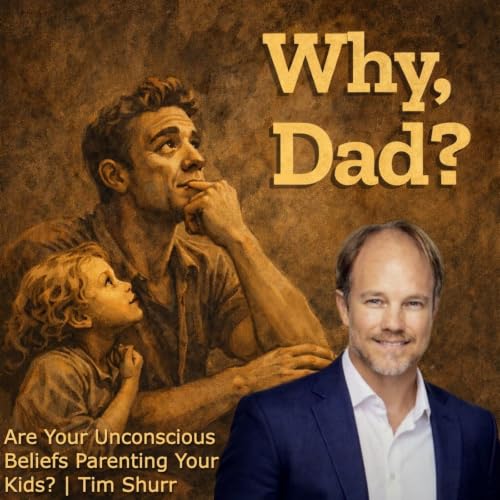
In this episode, Paul and Andrew sit down with Tim Shurr, a father, author, speaker, and expert in unconscious beliefs, to explore the hidden mental rules shaping how we parent, respond to stress, and connect with our kids.
Tim explains why dads should spend less time telling children what not to do, how listening changes as kids grow older, and how parents can help children become resilient without protecting them from every painful experience.
In this conversation:
🧠 How childhood beliefs become the rules governing our adult lives
👂 Why parenting older children requires more listening and less directing
🧭 How to tell children what to do instead of constantly telling them what not to do
❤️ Tim’s LUV framework: Listen, Understand, and Validate
🛡️ Why a parent’s job is not only to protect children, but to prepare them
🌱 How to intentionally build beliefs such as “I am loved,” “I am enough,” and “I can recover”
💨 Tim’s three-part resilience practice: breathe, ask better questions, and draw on useful resources
🪣 Why mindset techniques often fail when deeper unconscious beliefs remain unchanged
📱 How social media and AI can reinforce distorted stories rather than challenge them
Key takeaways:
• Misbehavior is often exploration, not merely defiance.
• Children learn more from how their parents react than from what their parents say.
• Resilience is a skill developed through repeated conversations and experiences, not a personality trait children either have or lack.
• Constantly rescuing children may protect them from discomfort today while preventing them from learning how to navigate difficulty tomorrow.
• Changing surface-level thoughts helps, but lasting change requires identifying the deeper beliefs driving those thoughts and behaviors.
About Tim Shurr: Tim Shurr, MA, is a Mind Architect, author, speaker, father, and creator of the One Shift Away method. For nearly four decades, he has helped people identify and change the subconscious patterns influencing their performance, relationships, habits, and emotional well-being.
Connect with Tim: - One Belief Away
- Instagram
- LinkedIn
- YouTube
Call to action: What is one rule you enforce with your children that you’ve never stopped to question?
Share this episode with a dad who works hard for his family but sometimes struggles to leave work mode behind. Follow Why, Dad? and leave a rating or review to help more parents find these conversations.


 1 時間 3 分
 42 分
42 分 39 分
39 分 2026/07/2145 分
 46 分
46 分 1 時間 1 分
 2026/06/2338 分