エピソード

  • DC Spills the Tea: From Power Lunches to Suya Spice and Why This City Is Finally Having Its Food Moment
    2026/06/20
    Food Scene Washington D.C. Bite into Washington D.C., and you quickly realize this capital is just as serious about flavor as it is about filibusters. Over the last few years, the city has evolved from steakhouse central to one of the country’s most dynamic, globally influenced dining labs, where neighborhood spots and tasting-menu temples share the same spotlight. Listeners are flocking to newly opened restaurants like Tatiana-style Afro-Caribbean and pan-African concepts, contemporary Filipino kitchens, and sleek West African dining rooms that mirror the city’s vibrant diaspora. Washingtonian and Eater Washington DC both highlight how these restaurants are centering heritage ingredients—think smoky suya spice, coconut‑rich stews, and fermented pepper sauces—while plating them with fine-dining finesse. Chefs are leaning into bold, memory-triggering flavors, but the execution feels distinctly modern: smaller, shareable plates, chef’s-counter seats, and tasting menus that tell a story course by course. Michelin’s continued attention to Washington D.C., with stars sprinkled from downtown to the suburbs, has only fueled the ambition. According to the Michelin Guide, chefs at restaurants like minibar by José Andrés and Pineapple and Pearls helped cement the city’s reputation for avant‑garde tasting menus, inspiring a wave of younger talent to experiment with fermentation labs, live-fire hearths, and hyper-seasonal menus that can change overnight. Signature dishes might be a single perfect Chesapeake oyster dressed with yuzu kosho, or a dry-aged duck glazed in local honey from a farm just across the Potomac. Local sourcing is not a buzzword here; it is a backbone. The Washington Post reports that many of the city’s most talked‑about openings build menus around mid‑Atlantic ingredients: rockfish, blue crab, Shenandoah Valley lamb, and market-fresh produce hauled in from nearby Virginia and Maryland farms. At peak season, listeners can practically taste the farmers’ market in their martinis via tomato water, in their crudos with pickled ramps, and in their desserts with pawpaw and black walnut. The cultural calendar reinforces the city’s culinary momentum. Events like the Smithsonian’s African American Foodways celebrations, the Around the World Embassy Tour, and the Capital Food Fight organized by José Andrés’s World Central Kitchen turn Washington D.C. into a roaming tasting room, where embassy chefs, local restaurateurs, and visiting stars cook side by side. What makes Washington D.C. singular is the way power‑lunch formality now coexists with unapologetically personal, immigrant‑driven cooking. This is a city where a policy wonk can finish a late hearing, slide into a bar seat at a tiny neo-bistro, and be served a plate that carries flavors from Lagos, Manila, or Oaxaca while still tasting unmistakably mid‑Atlantic. For listeners who care where food is going next, Washington D.C. is no longer a supporting character; it is one of the main stages. Get the best deals https://amzn.to/3ODvOta
    続きを読む 一部表示
    3 分
  • DC Spills the Tea: How the Capital Became a Secret Food Powerhouse No One Saw Coming
    2026/06/18
    Food Scene Washington D.C. Washington D.C. is having a moment, and this time it is not about politics. It is about what is happening on the plate. The city that once leaned on steak houses and power lunches is now a playground for ambitious chefs, boundary‑pushing tasting menus, and deeply rooted neighborhood spots that celebrate the capital’s many cultures. At the fine‑dining edge, listeners will find tasting menu temples like Pineapple and Pearls in Capitol Hill reasserting D.C.’s status as a serious food town, with intricate, seasonal plates that feel more like couture than dinner. Nearby, minibar by José Andrés still functions as a culinary think tank, where bites arrive as edible science experiments built on modernist technique and global flavors. These restaurants capture Washington D.C. taste for ceremony, but the energy today is just as strong in casual, joyful spaces. Newer arrivals such as Daru in the H Street corridor showcase how Washington D.C. chefs remix tradition. At Daru, Indian flavors meet cocktail‑bar swagger: crispy gunpowder fries dusted in spice, butter chicken transformed into a rich, shareable dip, and drinks perfumed with cardamom and mango. In Adams Morgan, Tail Up Goat continues to inspire the local scene with Mediterranean‑leaning plates built on Mid‑Atlantic ingredients, turning house‑baked breads, Chesapeake seafood, and farmers‑market vegetables into quietly thrilling combinations. These places speak to a city that likes its cooking serious but its dining rooms relaxed. Local ingredients are no longer a talking point; they are the backbone. Chefs across the city build menus around Maryland blue crab, Rappahannock oysters, Shenandoah Valley lamb, and produce from Virginia and Pennsylvania farms. A simple crab toast at a Navy Yard wine bar or an oyster platter along the Wharf tells listeners exactly where they are: briny, sweet, and just pulled from nearby waters. Even pasta spots in neighborhoods like Shaw now lean into regional flours and cheeses from mid‑Atlantic creameries. Washington D.C. calendar overflows with culinary events, from the National Cherry Blossom Festival’s food pop‑ups, where petals inspire everything from sakura‑hued cocktails to delicately scented desserts, to restaurant weeks that lure listeners into trying three or four new spots in a single stretch. Around these events, a diaspora of Ethiopian, Salvadoran, Korean, and Caribbean restaurants keeps the everyday dining scene vibrant, making it entirely possible to eat across continents in a single weekend without leaving the Metro system. What makes Washington D.C. unique is the way high‑level craft, global perspective, and local pride intersect. This is a capital where embassies and neighborhood carryouts shape the same palate, where a blue‑crab roll and a 15‑course tasting menu feel like part of one conversation. For food lovers paying attention, Washington D.C. is no longer a supporting player. It is one of the country’s most compelling stages. Get the best deals https://amzn.to/3ODvOta
    続きを読む 一部表示
    3 分
  • DC's Food Scene is Hotter Than a Michelin Star Scandal: From Crabcakes to Kimchi Slaw, the Capital is Serving Looks
    2026/06/16
    Food Scene Washington D.C. Washington D.C. is having a moment at the table, and it smells like live-fire smoke, Old Bay, and just-torched meringue. Across the city, new restaurants are turning the nation’s capital into one of the country’s most dynamic dining playgrounds. At Petite Cerise on 11th Street, chef Jeremiah Langhorne of The Dabney channels a bright, everyday French spirit into dishes like buckwheat crêpes folded around local mushrooms and silky eggs, bringing a farmer’s-market sensibility to a Parisian café daydream. Over in Navy Yard, Pascual offers modern Mexican cooking that trades cliché for precision: think masa made from heirloom corn alongside seafood grilled just until it tastes like the ocean at dusk. Innovation in Washington D.C. often arrives wrapped in a story. At Tatiana’s sibling concept Dōgon inside the restored Atlantic Building, Afro-diasporic flavors meet French technique in dishes such as peanut-laced sauces over impeccably seared fish, underscoring how Black culinary traditions shape the city’s future as much as its past. Meanwhile, at Mita in Shaw, vegetable-forward Middle Eastern plates—charred carrots with labneh, ember-roasted eggplant slicked with pomegranate—connect D.C.’s growing interest in plant-based dining with the comfort of centuries-old recipes. Local ingredients are the quiet power players. Chesapeake blue crab becomes a passport to nostalgia at places that refuse to let crabcakes fade into tourist-trap territory, instead presenting them almost naked, sweet and barely bound. Spring brings Rappahannock oysters on the half shell, briny and cold as the Potomac in January, at raw bars across The Wharf. Even cocktail programs are going regional, with bartenders infusing gins with Virginia-grown herbs or shaking sours sweetened by honey from rooftop hives in Dupont Circle. Cultural mash-ups are now the city’s default setting. In Columbia Heights, Korean chefs are riffing on Southern barbecue with gochujang-glazed ribs and kimchi-brightened slaws, while pop-up dinners in H Street corridors might pair Ethiopian injera with Tennessee hot chicken, each bite a reminder of the immigrant communities that give Washington D.C. its flavor. Annual events like the Smithsonian’s Folklife Festival food demonstrations and the RAMMY Awards season turn dining into a citywide sport, where listeners cheer on chefs the way others track election-night returns. What makes Washington D.C.’s culinary scene unique is the way power and personality share the table. This is a city where a Michelin-starred tasting menu might sit a few blocks from a strip-mall pupuseria, and both feel essential. For food lovers paying attention, Washington D.C. is no longer just where policies are written; it is where the next chapter of American cooking is being cooked, plated, and passed across the table right now. Get the best deals https://amzn.to/3ODvOta
    続きを読む 一部表示
    3 分
  • DC's Power Lunch Glow-Up: From Boring Steakhouses to Michelin Stars and Jerk Chicken That'll Make You Skip That Hill Meeting
    2026/06/13
    Food Scene Washington D.C. Capital Plates: Why Washington D.C. Is Having a Delicious Moment In Washington D.C., power lunches have never been so literal. The city that once ran on steak houses and policy talk now hums with tasting menus, Afro-Caribbean smoke, and dazzling omakase counters, all within a few Metro stops. According to The Washington Post, restaurants like Moon Rabbit from chef Kevin Tien have helped redefine contemporary Vietnamese cooking in the city, blending Gulf seafood with fish sauce caramel and herbs so bright they practically glow on the plate. At Apéro in Georgetown, the focus on Champagne and coastal European small plates turns a simple snack of anchovy toast into something flirtatious and indulgent, proof that D.C. has fully embraced the art of lingering over bites instead of rushing back to the Hill. The Michelin Guide’s attention has only intensified the city’s ambitions. At Jônt, chef Ryan Ratino serves an intimate, high-wire tasting menu where dry-aged fish and meticulously sourced Japanese wagyu appear like edible sculpture, while minibar by José Andrés continues to treat dinner as theater, sending out whimsical bites that crunch, fizz, or disappear on the tongue in a single, mind-bending second. These counters have inspired a wave of smaller, chef-driven projects, from hidden omakase rooms to tasting-menu pop-ups announced at the last minute on Instagram. Local flavor is not an afterthought. Farmers and Fishers on the Georgetown waterfront and Founding Farmers near the White House showcase Mid-Atlantic ingredients with glossy precision, turning Chesapeake blue crab into rich dip or crab cakes that smell of salt air and Old Bay. At Anju, Korean fried chicken shatters audibly under gochujang glaze, while at Bammy’s on the riverfront, smoke from jerk grills wraps listeners in allspice and chili, a reminder that D.C. is as Caribbean and African as it is federal. Food festivals and events keep the momentum high. The annual RAMMY Awards from the Restaurant Association Metropolitan Washington turn chefs into local celebrities, and the Smithsonian’s Folklife Festival frequently gives regional and global foodways a stage, from pupusas sizzling on griddles to West African stews perfuming the National Mall. What makes Washington D.C.’s culinary scene unique is the collision of influence and intention: diplomats, immigrants, and homegrown chefs all drawing from Chesapeake waters, global spice cabinets, and serious policy-town work ethics. For food lovers, this is a city where every plate carries a point of view—and the debate, for once, is delicious. Get the best deals https://amzn.to/3ODvOta
    続きを読む 一部表示
    3 分
  • D.C. Drops the Power Lunch: Why the Capital Is Secretly America's Hottest Food Scene Right Now
    2026/06/11
    Food Scene Washington D.C. Washington D.C. is having a delicious identity crisis, and listeners are the lucky beneficiaries. Once pigeonholed as a steakhouse-and-power-lunch town, the city now feels more like a living tasting menu, where embassies, immigrant communities, and a new wave of ambitious chefs all share the pass. At the Michelin-starred end of the spectrum, Pineapple and Pearls on Capitol Hill has reclaimed its status as a destination for those who like their tasting menus playful as well as polished, with intricate seasonal courses that might move from pristine seafood to whimsical desserts in a single, seamless arc. Over in Shaw, Rose’s Luxury and its sister restaurant Little Pearl continue to push the city’s comfort zone with menus that read casual but eat like deep culinary essays, driven by farmers’ market finds from the Chesapeake region and beyond. The real electricity, though, is coming from Washington D.C. newer guard. Restaurants like Moon Rabbit at the Wharf have made Vietnamese-American cooking feel downright operatic, layering smoky grilled meats, bracing herbs, and funk-laced sauces into dishes that taste like both memory and manifesto. In Navy Yard, Albi has turned Levantine flavors into a live-fire spectacle, with wood-smoke perfuming everything from pillowy pita to deeply charred lamb, a sensory reminder that D.C. shares a shoreline with robust Middle Eastern and North African diasporas. Local ingredients are quietly starring in all of this. The briny sweetness of Chesapeake oysters, the snap of Mid-Atlantic sweet corn, and the floral punch of regional honey are showing up everywhere from minimalist tasting rooms to bustling fast-casual counters along U Street and H Street. Many chefs are treating the Potomac and nearby farms as their primary pantry, weaving in Southern inflections—think sorghum, country ham, and heirloom grits—that nod to the city’s place below the Mason-Dixon Line. This being Washington D.C., the food festivals feel like policy summits with better catering. Events like the Capital Food Fight and the Smithsonian’s food-centered programs turn sustainability, labor, and food justice into cocktail-party conversation, while night markets and go-go soundtracked block parties showcase Ethiopian tibs, Salvadoran pupusas, and Korean fried chicken within a few hungry steps of each other. What makes Washington D.C. singular is that its restaurants cook like the city talks: globally fluent, policy-aware, and unafraid of a little drama. For food lovers paying attention, this isn’t just a government town with good restaurants; it is one of the country’s most compelling culinary test kitchens, where every dinner feels like a front-row seat to what American dining is becoming next. Get the best deals https://amzn.to/3ODvOta
    続きを読む 一部表示
    3 分
  • D.C. Is Having Its Main Character Moment and Kwame Onwuachi Is Leading the Way
    2026/06/09
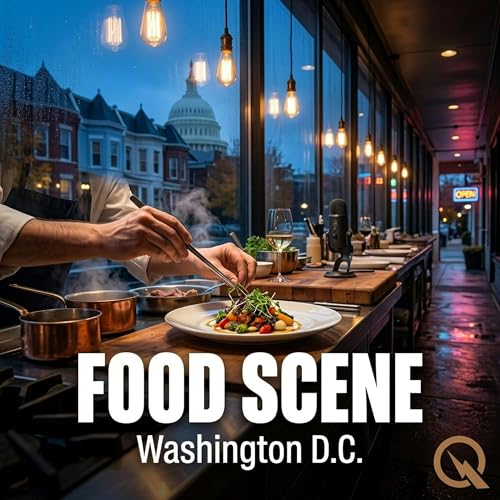
    Food Scene Washington D.C. Washington, D.C. is having a delicious moment, where serious technique meets a citywide appetite for fresh ideas, global flavor, and hyperlocal sourcing. From ambitious openings to polished neighborhood gems, the capital’s dining scene now feels less like a political dining room and more like a restless culinary laboratory. Among the most talked-about new arrivals, The Bazaar by José Andrés at the Waldorf Astoria Washington DC brings theatrical glamour and Spanish-inflected playfulness, while Dōgon at the Salamander, led by Kwame Onwuachi, channels West African, Caribbean, and Southern influences into a menu that feels both personal and distinctly Washington. Onwuachi’s cooking has become a touchstone for the city because it reflects D.C.’s layered identity: deeply local, proudly multicultural, and unafraid of reinvention. In a similar spirit, many of the city’s most exciting kitchens are leaning into regional produce, Mid-Atlantic seafood, and menus that shift with the season rather than sit still. That ingredient-driven approach is part of what makes the city compelling right now. Local farms and nearby Chesapeake ingredients show up in elegant, sharply plated dishes, while Ethiopian, Salvadoran, Korean, and West African influences continue to shape everyday eating across the city. The result is a food culture that can move from charcoal-kissed meats and fragrant stews to bright ceviches, polished tasting menus, and knockout sandwiches without missing a beat. The city’s food calendar adds even more energy. Events such as the Smithsonian Folklife Festival often spotlight foodways and cultural heritage, while Restaurant Week continues to draw listeners into tasting menus and special offers across the District. These gatherings are less about novelty for novelty’s sake and more about showing how Washington, D.C. eats as a community. What makes Washington, D.C. unique is that its dining scene is both cosmopolitan and grounded. It has the swagger of a capital city, but its best tables are defined by memory, migration, and local produce rather than flash alone. For food lovers, that means one thing: keep paying attention, because Washington, D.C. is serving more than dinner. It is serving a story. Get the best deals https://amzn.to/3ODvOta
    続きを読む 一部表示
    3 分
  • DC's Hottest Tables: Where Chefs Use AI to Predict Your Next Obsession and Mediterranean Meets Diplomatic Glamour
    2026/06/06
    Food Scene Washington D.C. Washington D.C.’s dining scene is having a vivid, high-velocity moment, where ambitious chefs, globally minded menus, and sharp-edged hospitality are turning the capital into one of America’s most interesting places to eat. The city’s newest energy comes from restaurants that mix serious technique with a sense of fun, while also leaning into AI-driven trend spotting and data tools that help chefs refine flavor ideas and stay ahead of shifting tastes.[1] At the forefront is a wave of openings and fresh concepts that prize personality as much as precision. Listen to the latest tableside buzz and you will hear the names of places like Joon, where modern Mediterranean cooking is framed with a polished, intimate feel, and Petite Cerise, which brings a French-leaning sensibility to Washington D.C.’s ever-evolving restaurant map. In a city where diners expect both substance and surprise, those kinds of kitchens stand out for dishes that feel bright, layered, and tightly composed. The broader trend shaping Washington D.C. is experimentation without losing touch with tradition. Chefs here are drawing from the city’s multicultural population and diplomatic character, which gives the local food culture an unusually global range. That means you might find Middle Eastern spice, West African depth, Salvadoran comfort, Korean heat, or French technique appearing in the same week’s dining conversations, often filtered through Mid-Atlantic ingredients and seasonal produce from nearby farms and markets. AI is also increasingly influencing the creative process, helping restaurants analyze flavor trends and customer preferences while chefs focus on invention and sustainability.[1] Washington D.C.’s culinary calendar adds even more momentum, with events such as the James Beard Foundation dinners and the annual RAMW Restaurant Week drawing listeners into the city’s dining rooms for special menus and peak-season talent. These gatherings matter because they showcase not just what is new, but what is durable: sharp cooking, confident sourcing, and a citywide appetite for discovery. What makes Washington D.C. special is that its food culture feels both local and international at once. It is a place where politics may dominate the headlines, but on the plate, the story is far more delicious: a city of ambitious chefs, distinctive neighborhoods, and a dining scene that keeps finding new ways to surprise. Get the best deals https://amzn.to/3ODvOta
    続きを読む 一部表示
    3 分
  • D.C. Ditches the Power Lunch: How Peruvian Ceviches and Vietnamese Fried Rice Became the New Political Currency
    2026/06/04
    Food Scene Washington D.C. Byte, Culinary Expert here, and Washington D.C. is cooking with a confidence that feels more capital than political these days. The city’s newest headliner is Causa/Amazonia in Shaw, where chef Carlos Delgado takes listeners on a high-low journey through Peruvian flavors, from pristine ceviches perfumed with lime and ají amarillo to Amazonian river fish kissed by smoke. Washingtonian and The Washington Post both single out Causa/Amazonia as one of the most exciting tasting menus in town, praising its unapologetically bold acidity and tableside theatrics. Downstairs, the more casual Amazonia bar slings pisco sours and anticuchos that taste like Lima after midnight. Not far away, at Moon Rabbit’s new home on the Wharf, chef Kevin Tien is rewriting Vietnamese American comfort food. The much-talked-about crab fried rice comes crowned with a blizzard of roe, while caramel fish and nuoc cham-glazed wings deliver the sticky, salty-sweet punch listeners dream about between bites. Local critics note that Moon Rabbit’s relocation has only sharpened its mission: a deeply personal immigrant narrative told through lavishly layered dishes. D.C.’s obsession with live-fire and hyper-regional American cooking glows at The Dabney in Blagden Alley, where chef Jeremiah Langhorne builds an entire Mid-Atlantic story line around his open hearth. Seasonal vegetables from nearby farms, Chesapeake oysters, and heritage pork arrive kissed with smoke, embers, or ash. According to coverage from food magazines like Bon Appétit, this devotion to Mid-Atlantic terroir helped cement Washington D.C. as a serious dining destination, not just a steakhouse town in a suit. Listeners chasing innovation are flocking to places like Jônt, where a tightly choreographed tasting menu leans into luxurious minimalism, and to Oyster Oyster, where a vegetable-driven, largely plant-based menu proves that turnips and mushrooms can be just as decadent as foie gras. These restaurants echo a broader D.C. trend: sustainability, fermentation, and collaborations with small local producers from Virginia wine country to Maryland oyster beds. On the street level, the city’s global heartbeat still thumps in Ethiopian spots along U Street, pupuserias in Mount Pleasant, and fast-casual hits like Call Your Mother, where chewy bagels stack pastrami, pink pickles, and local cheese into over-the-top breakfast monuments. Festivals such as the Giant National Capital Barbecue Battle and the Around the World Cultural Food Festival turn the Mall into a roaming buffet of smoke, spice, and diaspora stories. What makes Washington D.C.’s culinary scene unique is that its power doesn’t come from flash alone; it comes from dialogue. Chefs with roots in Peru, Vietnam, the American South, and the Horn of Africa are all in conversation with Chesapeake oysters, Shenandoah produce, and the city’s own political stage. For food lovers paying attention, D.C. isn’t just following national trends—it is quietly, confidently setting them. Get the best deals https://amzn.to/3ODvOta
    続きを読む 一部表示
    4 分